
First impressions matter. And when I first opened a Solana block explorer, something clicked—fast, like a key in a familiar lock. I’m biased, sure, but Solana’s tooling (especially explorers) feels… crisp. Short and to the point. It helps you answer the “what happened?” question in seconds, and that matters when money and time are on the line.
Okay, so check this out—blockchain explorers are more than transaction lists. They’re the forensic toolkit for on-chain life. You want to trace a token transfer? Fine. You want to audit a smart contract call? Also fine. You want to figure out why your swap didn’t go through? That part can be painful without the right view. My instinct said: use an explorer that gives you both the micro details and the higher-level picture. That’s why I keep recommending solscan to friends and colleagues.
Here’s the thing. Solana is fast. Very fast. That changes how you investigate things. Short confirmation windows mean that issues escalate quickly. So the explorer needs to be quick, too. It should surface transaction statuses, inner instructions, and token movements without making you click seven times. The good ones do. The rest… not so much.
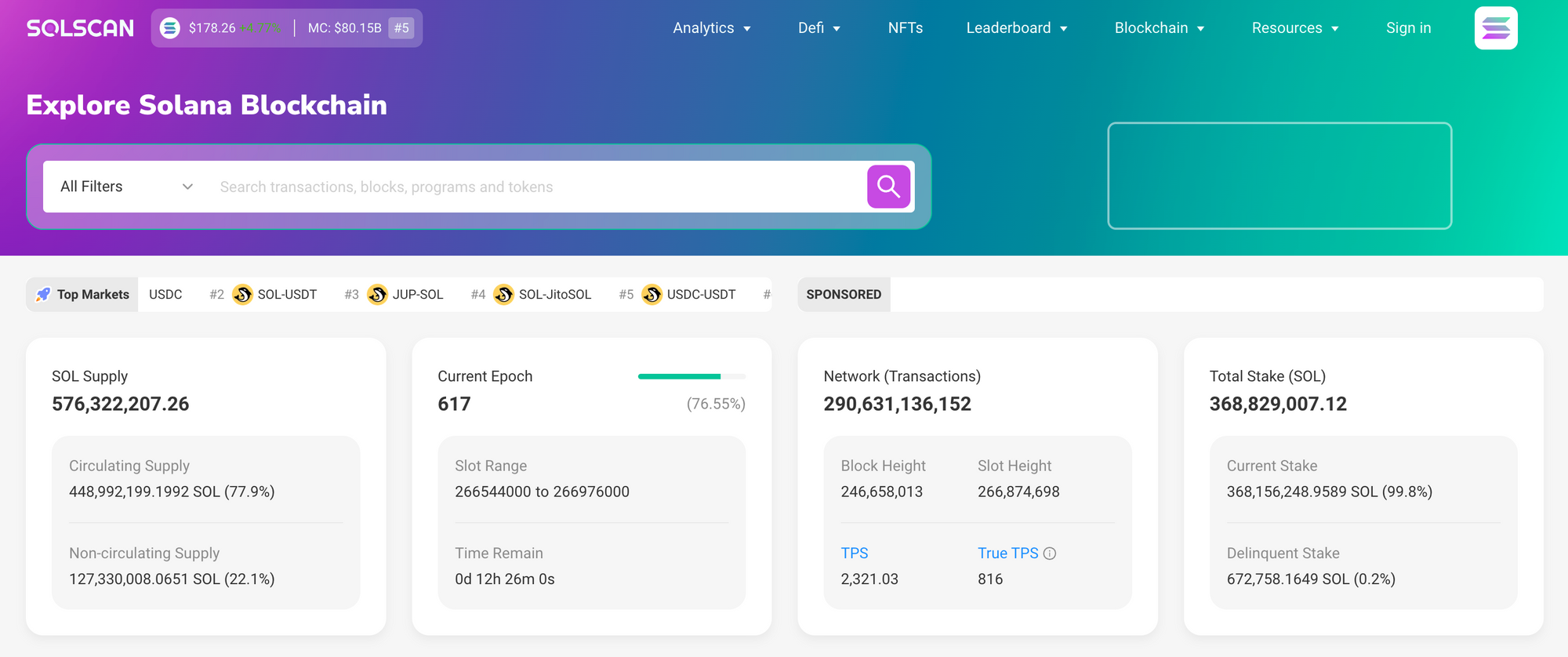
What to look for in a Solana explorer
Start with the basics. Transaction hash, slot, timestamp. But then go deeper. Medium-level features that actually save time include decoded instructions, inner instructions, and logs that are easy to copy. Longer-term, you want address profiles and token trackers that don’t lie to you. On one hand, design matters—clean layout, sensible defaults. On the other hand, raw depth matters—show me the inner instructions and let me download logs.
Decoding is a must. Seriously. If a transaction just shows program IDs and byte blobs, you’re stuck doing manual decoding or cross-referencing CLI docs. That’s tedious and error-prone. The explorer should show human-readable instruction names (swap, approve, transfer) and show affected accounts. Initial reactions are visceral—if it reads like a foreign language, I’m out.
Performance counts. Solana’s block times mean explorers must index quickly. I noticed some explorers lag by a few seconds; okay fine, that happens. But multi-minute delays? That becomes a liability when you’re debugging frontruns or checking payment receipts. My rule: if an explorer lags behind the network consistently, look elsewhere.
Practical walkthrough: tracing a failed swap
Imagine you sent a swap and got an error. Frustrating. First step: grab the transaction signature. Paste it in the explorer search. Immediately check the status. If it’s “Failed” or “Partial,” expand logs. On many swaps the error is revealed in the program logs—insufficient balance, slippage exceeded, or a CPI call that failed downstream. These clues save you from assuming the worst.
Then check inner instructions. A swap often triggers multiple CPIs to pools and token programs. If one CPI failed, the explorer should show where that failure happened and which account ran out of funds. I once spent an hour debugging a swap that failed because an intermediate token account wasn’t initialized—yeah, very very annoying. A clear explorer view would have cut that to five minutes.
Look at token transfers next. Did the tokens move to a wrapped SOL account? Was a rent-exempt threshold missed? The explorer’s token movement view should present token amounts, mint addresses, and the pre/post balances. If you see decimals inconsistent with the token’s mint, you now know whether it’s a UI formatting issue or a chain-side problem.
Beyond transactions: address and token pages
Address pages are underrated. They tell you a story: which programs an address interacted with, token holdings, and recent activity. For a dev or auditor, that’s gold. You can spot automated bots, high-frequency traders, or airdrop recipients at a glance. I like explorers that let you tag or bookmark addresses because context matters—especially when you revisit them later.
Token pages should show mint metadata, holders, transfers, and recent mints or burns. If a token suddenly gets a huge holder, it’s often the start of something—either legitimate growth or an initial liquidity bootstrapping. The explorer should make inspecting that trend easy and fast.
Tips and caveats from real use
Don’t trust any single source blindly. Check multiple explorers if something smells off. Some explorers index differently or cache certain metadata. If balances mismatch, check the on-chain state directly with an RPC call or CLI. I’m not 100% sure about every edge-case, but double-checking keeps you honest.
Watch for metadata inconsistencies. Metadata standards on Solana are good but not perfect. Sometimes token names or images are wrong because of off-chain metadata. That can mislead casual users. So get in the habit of checking the mint address when something doesn’t look right.
Privacy note: explorers reveal public activity. They don’t show private keys, but address histories are open. If you’re privacy-sensitive, use ephemeral addresses and avoid linking real-world identity to them.
FAQ — Quick answers to common questions
How do I find a transaction on Solana?
Copy the transaction signature (starts with a long base58 string) and paste it into an explorer’s search box. The explorer will show status, logs, and decoded instructions where available.
Why did my swap fail even though I had funds?
Common causes include slippage settings, uninitialized token accounts, or downstream CPI failures. Check inner instructions and logs to see which program reported the error.
Can explorers show decoded smart contract events?
Yes. Good explorers decode instructions and sometimes custom program events. However, decoding depends on available IDLs or known program interfaces, so custom programs may show raw data unless the explorer supports them.

